
The Forgetting Curve: The Thing Nobody Warned You About (But Every Trainer Should Know)

You know that participant who was nodding along to everything you said? The one who took detailed notes? Who told you afterward, "This was exactly what I needed"?
Yeah, they forgot most of it by Tuesday.
And honestly? So did everyone else.
If you've ever wrapped up a session feeling like you absolutely crushed it, then wondered two weeks later if anyone actually remembered any of it, congratulations. You've met the Forgetting Curve. And it's kind of a jerk.
What Is the Forgetting Curve?
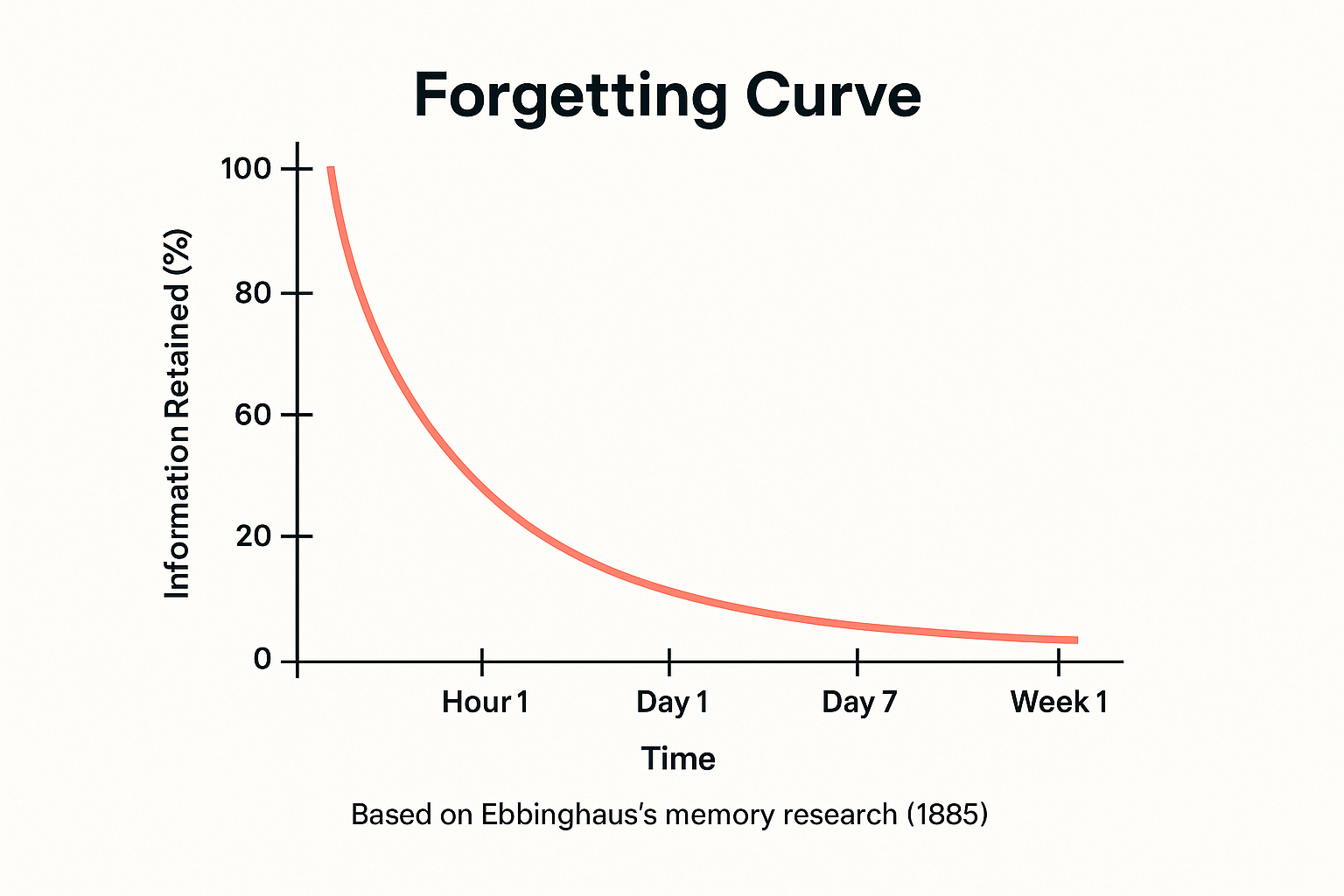
Back in the 1880s, German psychologist Hermann Ebbinghaus ran memory experiments on himself. (Yes, really.) What he discovered was both fascinating and slightly depressing: people lose information rapidly unless something intentionally brings it back to their attention.
According to his research, the average learner forgets:
About 50% within the first hour
Around 70% within 24 hours
Up to 90% within a week
So even if your session is brilliant and life-changing, the brain still does what it does. It prioritizes what it thinks is important and quietly dumps the rest.
That's not your teaching quality. That's just biology. Thanks for the depressing news, Ebbinghaus.
Why This Matters for Trainers

Here's the truth nobody says out loud: Most trainers assume that if participants loved the session, they'll remember it.
But Ebbinghaus proved that enjoyment and retention aren't the same thing. You can have a room full of people who thought your workshop was amazing and still have 90% forget the key concepts by next Tuesday.
The Forgetting Curve is the scientific reason why post-session engagement matters. Not because trainers aren't doing enough. But because the brain needs support after the session to hold onto what you taught.
Without that support? The curve wins. Every time.
Try This Experiment on Yourself
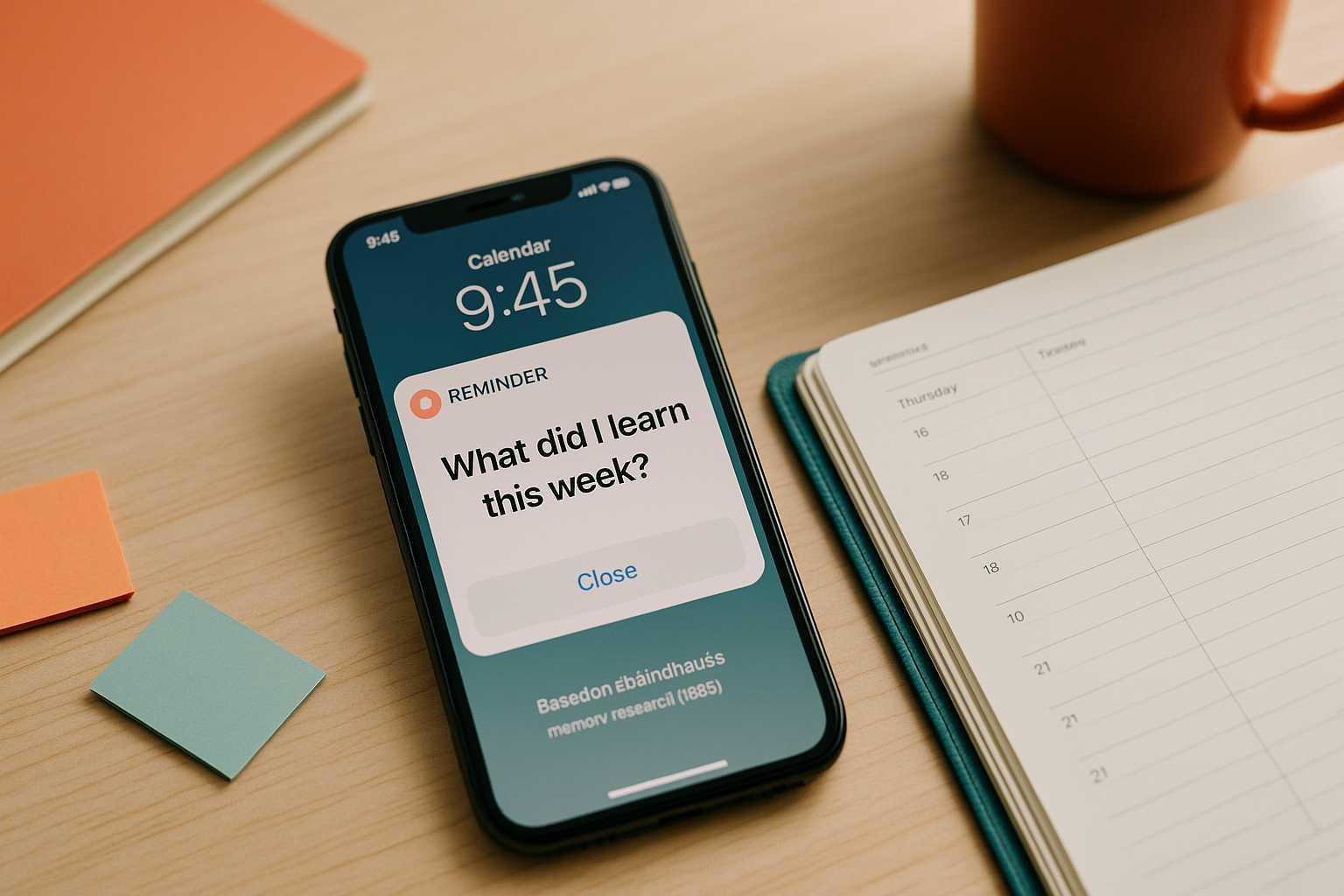
Let's test the Forgetting Curve on you. Not with your participants. With something you learned recently.
Think about a podcast, article, or conversation from last week that made you think, "That's useful. I should remember that."
Can you remember what it was?
If it's fuzzy (or completely gone), that's the Forgetting Curve in action.
Now here's the experiment:
Next time you learn something important, set two reminders on your phone:
Day 3: "What did I learn on Monday that felt important?"
Day 7: "Did I use that thing I learned last week?"
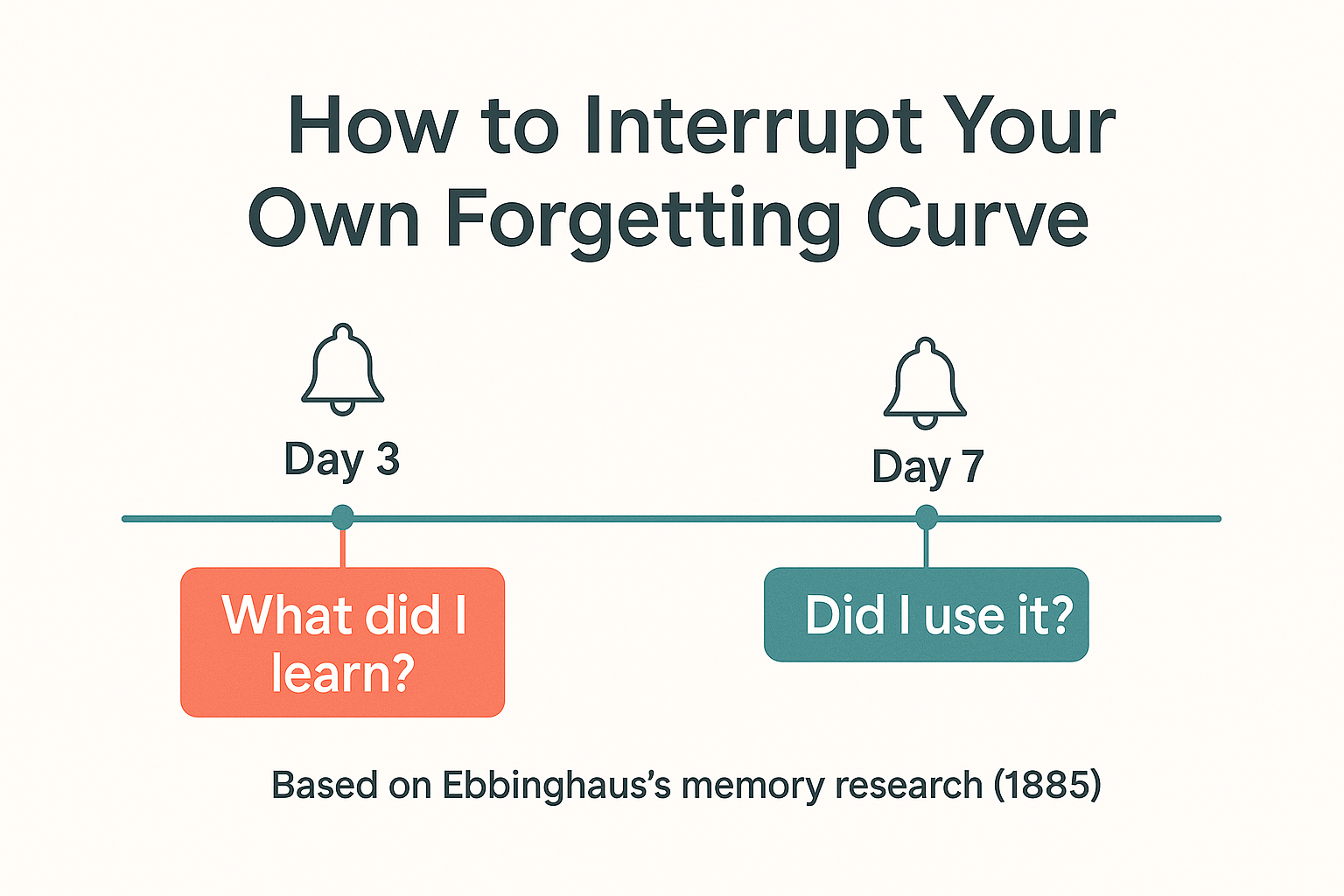
When those reminders pop up, take 30 seconds to recall it. That's it.
On Day 3, you'll probably remember most of it. On Day 7, you'll be surprised by what stuck and what vanished. And here's the magic: just by recalling it, you're strengthening the memory. You're fighting the curve in real time.
Once you feel how this works in your own life, you'll understand why your participants need those same nudges.
Because if you're forgetting things you wanted to remember, they're definitely forgetting what you taught them.
Want Help Creating Follow-Up Systems?
If you want simple strategies for applying this research to your sessions, I created a free 5-day email series. Real-world tools you can use immediately. No theory dumps. Just what works.
👉 Sign up here for the free series and start making your sessions stick, after they're over.
Because the real work happens after the session ends.
Let's make sure your impact doesn't disappear by Thursday.